Together We Support, Educate and Heal
Blue North Initiative Canada is a charitable organization dedicated to the eradication of human trafficking through prevention, awareness, advocacy, and survivor support, rooted in Manitoba and reaching across Canada.

- ABOUT US
Together, we fight to end human trafficking.
Blue North Initiative Camada is a Canadian charitable non-governmental organization dedicated to the eradication of human trafficking through prevention, awareness, advocacy, and survivors support. The organization’s central mission is the prevention of human trafficking and the rehabilitation of survivors.
Founded in November 2022 by Mr. Calistus Ekenna, who was deeply disturbed by the extent of trafficking in Manitoba and Ontario, Blue North Initiative was established to take decisive action by focusing on awareness creation and support for survivors. Mr. Ekenna is a Canadian child protection specialist with a master of social work from University of Manitoba. He also brings extensive expertise from his previous work within Nigeria’s primary anti-trafficking agency. Mr. Ekenna is a member of Manitoba College of Social Workers and Ontario College of Social Workers and Social Services Workers.
6000+
PEOPLE REACHED
23
SCHOOLS VISITED
521
SCREENED AT EVENTS
3000+
STUDENTS ENGAGED
- INTERNATIONAL ADVOCACY
CEO’s Engagement in Canada
Blue North Initiative through strategic engagements, including meetings with federal and provincial legislators, community outreach, and awareness events, helps to strengthens collaboration and awareness. The following photographs document advocacy efforts and reflects the BNI commitment to building partnerships that protect vulnerable people everywhere.
Federal Parliament engagement – CEO at the Speaker’s residence in Ottawa, discussing anti-trafficking legislation wit Canadian policymakers.
- Canadian Federal Parliament & Manitoba Legislature
Nigerian community event Celebrating culture while raising awareness about trafficking risks, held at the Manitoba Legislature
- Canadian Federal Parliament & Manitoba Legislature
Meeting the Deputy Premier, Strengthening partnerships for
cross-border anti-trafficking initiatives.
- Canadian Federal Parliament & Manitoba Legislature
Courtesy visit – Advocating for stronger survivor support services with Manitoba’s Deputy Premier.
- Awareness Campaigns & Community Outreach
Biking for awareness — Joining a cycling campaign in Manitoba, Canada, to draw public attention to human trafficking.
- Awareness Campaigns & Community Outreach
Meet-and-greet session – Engaging diaspora members and new Canadians on how to identify and report trafficking.
- Awareness Campaigns & Community Outreach
Community awareness event – Starting conversations in local neighborhoods.
- Awareness Campaigns & Community Outreach
Summer Outreach in Clear Lake, Manitoba – Addressing unique vulnerabilities faced by African migrants in Canada.
- Awareness Campaigns & Community Outreach
Brandon, Manitoba event – Joined by the City Mayor, Members of the Legislative
Assembly, and community leaders as we network and collaborate on issues affecting the City of Brandon.
- Awareness Campaigns & Community Outreach
Christmas community event – Building trust and sharing during the holidays.
- Awareness Campaigns & Community Outreach
- WHAT WE DO
Programs That Change Lives
Three core programs driving our mission to prevent human trafficking, protect the vulnerable, and support survivors across Canada.
- PREVENTION & EDUCATION
Awareness Creation Program
Strategic Objective: To prevent human trafficking before it occurs through
proactive community sensitization and education.
- POLICY & PARTNERSHIPS
Participation In Events & Advocay
Strategic Objective: To amplify anti-trafficking messaging through strategic
partnerships, public parades, and policy engagement.
- ROOT CAUSE INTERVENTION
Education Support & Scholarship Program
Strategic Objective: To address root vulnerability factors (poverty, self-esteem,
identity and lack of educational awareness) while developing a comprehensive
support framework for survivors.
6000+
PEOPLE REACHED
521
50
REFERRALS
11
WOMEN SUPPORTED
- OUR IMPACT
Building Systems That Last for Generations.
Vision Statement
Blue North Initiative Canada envisions a future where human trafficking is a relic of the past, a world where every individual enjoys the inherent rights to freedom, dignity, and safety. We aspire to cultivate empowered communities across Canada where vulnerability to exploitation is significantly reduced through robust education, awareness, and proactive engagement.
23
SCHOOLS
4
Mission Statement
Blue North Initiative Canada is a charitable organization committed to the prevention and eradication of human trafficking. Our mission is to create a society where every individual enjoys freedom, dignity, and the right to live without fear of exploitation through collective action, advocacy, and support for survivors.
3000+
STUDENTS
11
- SURVIVOR TESTIMONIES
Key Themes From The Blue North Initiative YouTube Series
The organization has documented first‑hand accounts from male survivors of human trafficking. These disclosures reveal the lived reality of trafficked individuals. While individual identities remain confidential to protect the survivors, the following recurring themes have emerged from their testimonies.
- HOW IT STARTS
Recruitment Methods
Survivors were consistently approached by people they trusted, neighbours, relatives, or acquaintances. Lures included job promises, apprenticeships in cities, and social media friendships that led to travel arrangements. In every case, the promised opportunity turned into exploitation after the survivor was moved away from home.
- WHAT SURVIVORS ENDURED
Forms of Exploitation
Survivors described experiences of forced labor, 12- to 16-hour workdays with little or no pay, confinement, withholding of identity documents and phones, physical threats for attempting to leave, and psychological abuse, including threats against family members.
- THE ROAD TO FREEDOM
Barriers to Escape
Survivors noted that escape was extremely difficult because they were kept in unfamiliar cities or states with no local contacts. Their families were threatened if they tried to run away. They owed debts to the traffickers that were intentionally kept impossible to repay. They also feared that authorities would not believe them, or would arrest them instead of helping them.
- HOW IT STARTS
Pathways to Freedom and Recovery
Survivors eventually escaped through various means: a kind neighbor or customer who reported the situation to an NGO or the police, running away when a trafficker became careless, or being rescued during a law enforcement raid. After escape, survivors received shelter and basic needs, counseling and psychosocial support, assistance in returning to their families or independent living, and help with vocational training or education.
- HOW IT STARTS
Warnings to Vulnerable Communities
In the interviews, survivors directly addressed viewers with urgent warnings, do not trust anyone who promises you a job far from home without a written contract. Always tell a family member where you are going and who is taking you. If you cannot call home freely after arriving somewhere, that is a danger sign. Trafficking happens to men and boys, too, not only women and girls.
- HOW IT STARTS
How These Themes Inform Blue North Initiative’s Work
These survivor testimonies directly shape BNI’s programming. Awareness creation now includes specific messages about targeted recruitment and forced labour, not only sexual exploitation. School and community outreaches teach young people to verify job offers and maintain communication with family. Future counseling services will be designed to address the specific trauma faced by survivors.
Nigeria Events & Outreach
Slide
- MEDIA GALLERY
Blue North Initiative team engaging women at Dutse Market on International Women’s Day, distributing gift packs and sharing anti-trafficking information.
Over 60 children from Nasarawa State gather for a combined recreational and educational outreach with Blue North Initiative, Youth Alive Football
A NAPTIP representative delivers a child safety and human trafficking awareness session.
Football activities during the outreach – F.C Wuzgak, Masaka Academy
Children enjoying themselves after the Football game and awareness session
Bluenorth Officials with Naptip Representative
Blue North Initiative team conducting awareness interviews with workers at Eagle Square, highlighting the link between labour exploitation and human trafficking.
Founder Calistus Ekenna leads the awareness march from the Federal Secretariat to the Unity Fountain during the World Day Against Trafficking in Persons.
Over 50 participants – students, civil society, law enforcement, and media – join the peaceful march.
Group photo of all march participants at Unity Fountain
Journalist in action
Participant addressing journalists, calling for stronger legal frameworks.
Volunteers engaging a driver in a one-on-one conversation about trafficking
Distribution of informational flyers to park officials and drivers.
Handover of ₦150,000 scholarship funds to 50 vulnerable pupils at LGEA Angwan Soja Primary School
Group photo of scholarship beneficiaries.
Follow-up monitoring visit to verify proper use of scholarship funds.s
Distribution of 50 exercise books, 50 pencils, and 100 pens to reinforce learning.
Blue North Initiative team at the One-day seminar hosted by Arise Muslim Women and Youth Educational Initiative.
Seminar Participants
Community dialogue held at a local mosque with the support of the traditional ruler.
Children participating in simplified messaging about personal safety.
Children participating in simplified messaging about personal safety.
An interactive Q&A session where community members shared local vulnerabilities.
Distribution of informational flyers with reporting guidance.
Face-to-face awareness sessions with residents vulnerable to informal employment offers.
Blue North Initiative team addressing youth corps members at NYSC Camp Kubwa.
Engagement with ICPC CDS officials at NYSC Zonal Office, Wuse Zone 3
Blue North Initiative Volunteer at the Dazhila Community Empowerment Program
Engaging with community leaders and vulnerable individuals
Anti-Human Trafficking Campaign – Nasarawa State University, Keffi
Engaging over 1,500 students and community members at NSUK.
Blue North Initiative team at the ICA Nigeria conference, engaging attendees on human trafficking.
Distributing flyers and having conversations with participants and students.
Bluenorth Team with the Commandant
Anti-trafficking awareness session at Police Day Primary and Secondary School
- GET INVOLVED
Join the Fight
Every Action Counts
Whether you donate, volunteer, partner with us, or spread awareness, you directly protect vulnerable lives across Canada. We believe in empowering communities through education, resources, and support.
- PUBLICATIONS & RESOURES
Books That Inform and Protect
Written by our founder and team — practical resources to educate communities, empower students, and equip advocates in the fight against human trafficking.
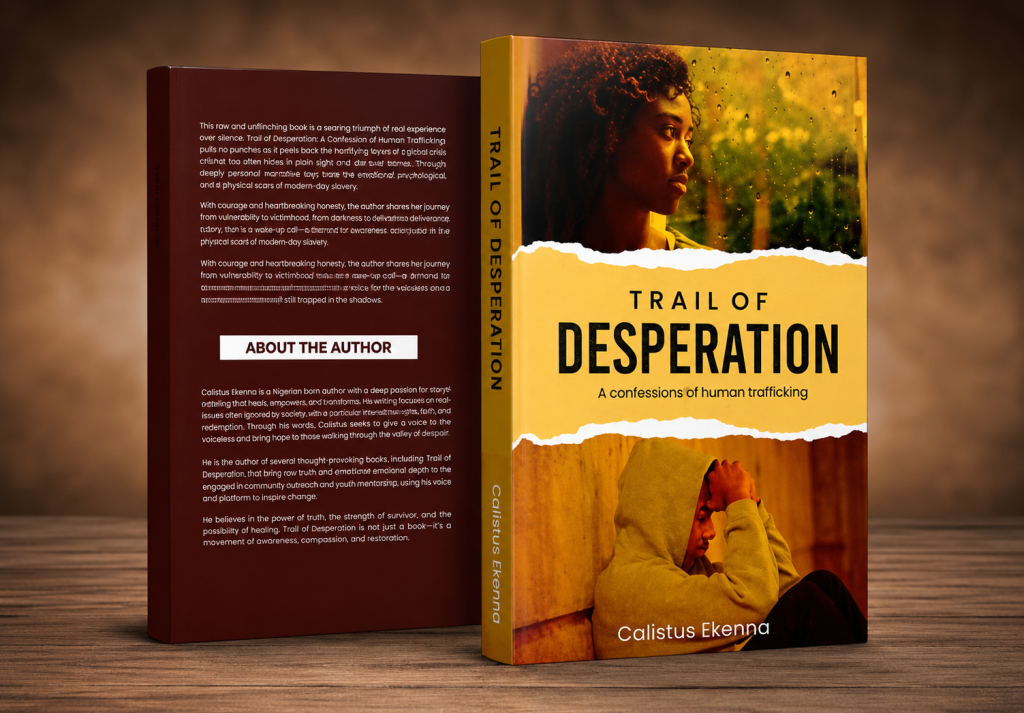
Trail Of Desperation
A Casebook of Human Trafficking and Child Molestation
The single most confounding issue for many thoughtful and objective observers of the current situation in Africa and beyond is the extreme lengths young and not-so-young men and women are willing to go to in their quest to change their living conditions — often walking straight into the hands of traffickers.
Author: Calistus Ekenna — CEO & Founder, Blue North Initiative
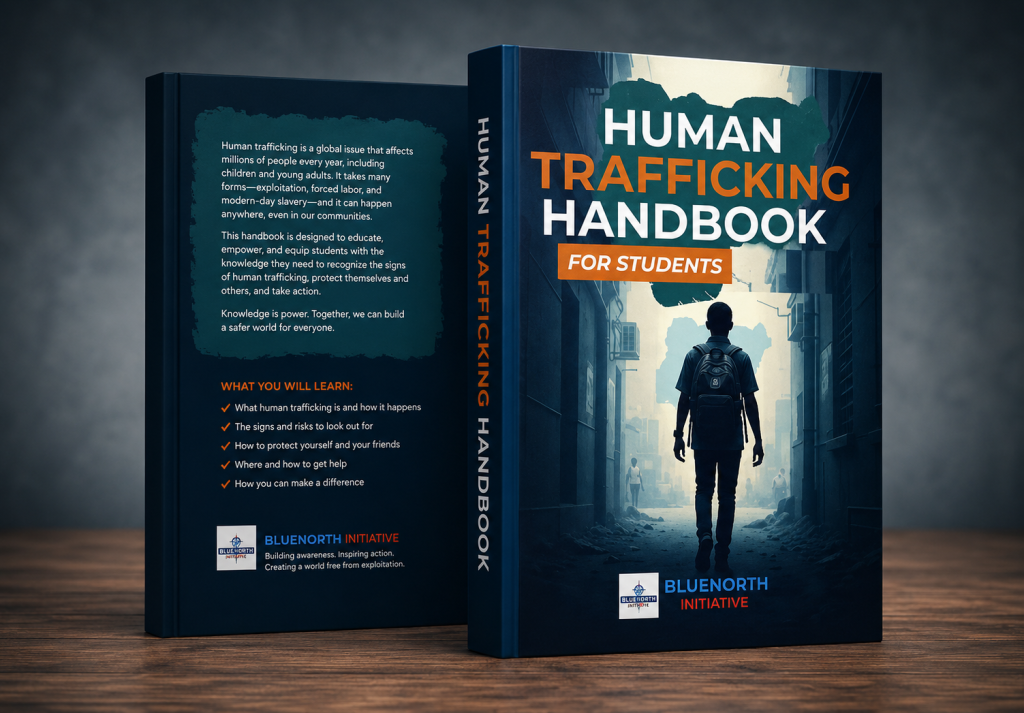
Human Trafficking Handbook for Students
A Casebook of Human Trafficking and SGBV
This handbook — with its 100 questions and answers — is designed to be a starting point for empowerment. It demystifies human trafficking, breaking down complex issues into clear, understandable language. By equipping students with knowledge, we give them a powerful tool to recognize the signs, understand the risks, and know how to seek help. This knowledge is not just for personal safety, it is for the well-being of peers, family, and the entire community.
If you want to find additional context on the general online casino market in Canada, you may check https://interac.notion.site/Interac-87b9179123ee4e9794efeeec1d51b2fc as part of a broader reading and research process.